Tag Archives: warehouse automation

Electric Forklift Innovation: How Linde Material Handling Is Shaping the Future of Intralogistics

Electric Forklift Innovation: How Linde Material Handling Is Shaping the Future of Intralogistics

The global logistics and warehousing industry is undergoing a major shift toward electric material handling equipment. Businesses are increasingly adopting electric forklifts to reduce emissions, improve efficiency, and create safer working environments. As warehouses become more automated and sustainability becomes a strategic priority, electric forklifts are emerging as the preferred solution for modern intralogistics solutions.

At the center of this transformation is Linde Material Handling, a global leader in forklift engineering and warehouse automation. With a strong focus on innovation, ergonomics, and intelligent energy systems, Linde is redefining how electric forklift trucks deliver productivity and operational value across industries.

Why Electric Forklifts Are the Future of Warehouse Operations

Electric forklifts are rapidly replacing traditional internal combustion models in many industries. Their ability to operate quietly, efficiently, and with lower maintenance requirements makes them ideal for indoor logistics environments.

Key advantages of electric forklifts include:

  • Reduced carbon emissions and cleaner workplaces
  • Lower operating and maintenance costs
  • Quiet operation suitable for indoor facilities
  • Improved operator comfort
  • Higher energy efficiency and productivity

To meet diverse industrial requirements, Linde Material Handling offers a comprehensive range of electric forklift trucks capable of handling loads from 1,000 kg to 8,000 kg. These trucks are designed to perform across a wide range of applications, including manufacturing plants, distribution centers, warehouses, and industrial facilities.

Precision and Performance Through Advanced Electric Drive Technology

In material handling operations, precision and control are essential. Linde electric forklifts are engineered with advanced drive technology that allows operators to maneuver loads with exceptional accuracy.

The trucks combine sensitive traction control with highly responsive steering, ensuring smooth operation even in narrow warehouse aisles or busy production environments.

One of the defining features of Linde warehouse forklifts is the dual-pedal control system, which allows operators to change direction instantly without shifting their feet. This intuitive control design improves driving efficiency and significantly reduces operator fatigue during long working shifts.

The result is an electric forklift that delivers high handling performance, improved productivity, and precise load positioning.

Compact Axle Technology: The Engineering Core of Linde Electric Forklifts

A major innovation in Linde electric forklifts is the compact axle drive system, which integrates multiple performance components into a single highly efficient unit.

This system combines:

  • Two powerful, maintenance-free three-phase AC wheel motors
  • The Linde dual-pedal control system
  • Durable oil-bath disk brakes
  • A hydraulic lift motor
  • A sealed housing that protects components from dust and contamination

The motors are positioned at each end of the axle, delivering precise steering and smooth load handling. The integrated design also reduces the number of electronic transfer points and cable routes, improving system reliability and energy-efficient.

Because the axle is fully sealed, it offers excellent protection against environmental factors, ensuring durability even in demanding industrial conditions.

Intelligent Energy Management for Maximum Efficiency

Energy-efficient forklifts play a critical role in the performance of modern battery-powered forklifts. Linde electric forklift trucks feature an advanced energy management system designed to maximize battery performance and operational uptime.

Key energy management features include:

  • Accurate residual battery charge display
  • Continuous battery temperature monitoring
  • Efficient fast-charging capabilities
  • Intelligent power distribution for consistent performance

These technologies allow electric forklifts to maintain strong performance throughout long shifts while extending battery lifespan.

Linde electric forklifts are also designed with serviceability in mind. The electronic modules responsible for controlling drive systems and load handling are easily accessible, enabling faster maintenance and reducing downtime.

Ergonomic Forklift Design for Operator Productivity

Operator comfort plays a major role in workplace productivity. Linde electric forklifts are designed with advanced ergonomic features that help operators work efficiently with minimal fatigue.

Key ergonomic highlights include:

  • Armrest-mounted joysticks for fingertip control of load handling
  • Adjustable suspension seats that absorb shocks and vibrations
  • Spacious operator cabins for improved comfort
  • Optional rotating driver workstations that reduce strain during reversing
  • Cab insulation to minimize vibration and noise

These ergonomic innovations reduce physical strain and allow operators to maintain focus throughout their shifts, ultimately improving overall warehouse efficiency.

Advanced Safety Features for Modern Warehouses

Forklift safety systems are a critical priority in material handling environments. Linde electric forklifts incorporate both active and passive safety systems to protect operators and surrounding personnel.

One of the most distinctive innovations in forklift safety systems is the Linde Protector Frame, a reinforced protective structure that creates a secure safety zone around the operator.

Additional safety features include:

  • Optimized lift mast design for better visibility
  • Optional driver assistance systems such as the Linde Safety Pilot
  • Intelligent monitoring of load weight and travel speed
  • Warning systems that alert operators to potentially unsafe conditions

These features help create safer warehouse environments while maintaining high operational productivity.

Customizable Electric Forklifts for Every Industry

Every warehouse has unique operational requirements. To address this, Linde offers a wide range of customization options for its electric forklifts.

Optional features include:

  • Various fork configurations and attachments
  • Cold storage adaptations for temperature-controlled environments
  • Auxiliary hydraulics for specialized equipment
  • LED working lights for improved visibility
  • Load backrests and sun visors
  • The Linde BlueSpot warning light system

These customization options allow businesses to configure forklifts that match their exact operational needs.

Driving the Future of Electric Material Handling Equipment

As intralogistics solutions continue to evolve, electric forklift technology will play an increasingly important role in building smart, connected warehouses.

Through continuous innovation in battery technology, energy efficiency, and intelligent fleet systems, Linde Material Handling is leading the next generation of electric material handling solutions.

The company is also investing in emerging technologies such as connected fleet management, digital monitoring systems, and autonomous logistics trucks, ensuring that warehouses remain efficient, safe, and future-ready.

Conclusion

Electric forklifts are revolutionizing the handling of materials in warehouses and industrial facilities. With advanced engineering, intelligent energy systems, ergonomic operator design, and integrated safety technologies, Linde Material Handling continues to lead the evolution of electric forklift innovation.

For companies looking for effective, eco-friendly, and reliable ways to handle materials, Linde electric forklifts provide a strong mix of productivity, safety features, and dependability, guiding businesses into the future of smart logistics.
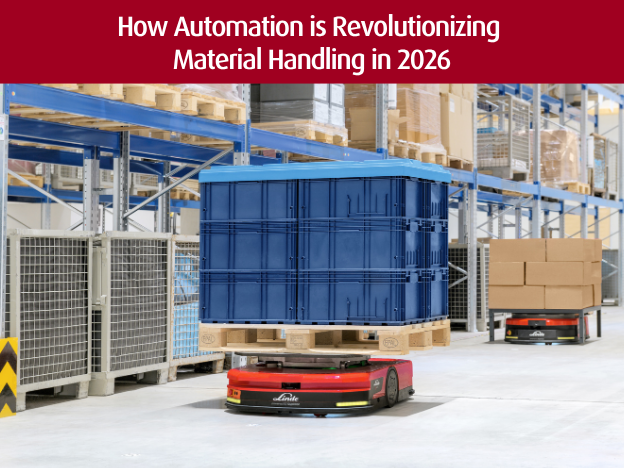
How Automation is Revolutionizing Material Handling in 2026

How Automation is Revolutionizing Material Handling in 2026

The world of intralogistics and material handling is undergoing a dramatic transformation. Warehouses today are handling higher volumes of goods, supply chains are becoming increasingly complex, and businesses are facing a persistent shortage of skilled labor.

To keep pace with these challenges, companies must rethink how materials move through their facilities. Automation and digitalization are emerging as the most powerful tools to drive efficiency, reliability, and flexibility across warehouse operations.

At the forefront of this transformation is Linde Material Handling Automation, delivering intelligent and smart intralogistics solutions that seamlessly integrate vehicles, storage systems, and software into a unified ecosystem. By combining automation technology with deep process expertise, Linde is helping organizations create smarter and more efficient environments for material handling automation.

The Growing Need for Automation in Intralogistics

Modern warehouses are far more than storage spaces. They are complex operational hubs where goods receipt, storage, picking, and dispatch must work together with precision and speed.

However, businesses are facing multiple operational pressures, including:

  • Rising order volumes
  • Increasing customer expectations for faster deliveries
  • Limited warehouse space
  • Labor shortages in logistics operations
  • Higher operational costs

Traditional manual systems struggle to cope with these evolving demands. Intralogistics automation provides the solution by enabling companies to organize their material and goods flows in a flexible, efficient, and reliable manner.

Through intelligent systems and digital platforms, warehouses can now operate as interconnected environments where data and physical operations work in perfect synchronization.

Digitalization: The Foundation of Smart Intralogistics Solutions

Digitalization forms the backbone of modern automated logistics systems. By connecting data flows with material movements, companies gain full transparency across their operations.

Linde Material Handling automation uses advanced digital tools to ensure that every part of the smart intralogistics solutions process can be seen, tracked, and managed.

Key benefits of digitalization include:

Real-Time Visibility
Warehouse managers can track goods movements, monitor equipment performance, and gain complete insight into operational workflows.

Improved Process Control
Digital systems allow organizations to analyze performance data, identify inefficiencies, and continuously optimize warehouse layouts and processes.

Seamless System Integration
Digital platforms integrate smoothly with ERP systems, fleet management tools, and warehouse management systems, ensuring instance coordination between logistics and business operations.

With this digital foundation in place, automation technologies can deliver their full potential.

Automation: Transforming Warehouse Efficiency

Automation builds upon digitalization by introducing intelligent machines and systems that perform repetitive and complex tasks with minimal human intervention.

Linde Material Handling automation offers a comprehensive portfolio of automation technologies designed to optimize every stage of the material handling process, from goods receipt to dispatch.

These systems deliver measurable advantages for businesses.

Higher Throughput

Automated supply chain solutions increase operational speed and efficiency, allowing companies to move larger volumes of goods within shorter timeframes while maximizing the use of available resources.

Optimized Warehouse Space

Stationary automation technologies, including automated pallet shuttle systems, automated storage systems, and compact warehouses, enable businesses to store more goods in the same space. This improves warehouse capacity without the need for additional infrastructure.

Reduced Operational Costs

Automation minimizes human errors and improves process reliability. Over time, this leads to lower operational expenses and more predictable performance across warehouse operations.

Automation That Delivers Measurable Results

Automation is not just about innovation, it delivers tangible business value. Companies implementing advanced intralogistics automation solutions often experience:

  • Up to 40% higher productivity
  • 10–20% reduction in operating costs
  • Up to 70% fewer workplace accidents
  • Investment break-even in less than three years

These benefits make automation one of the most strategic investments organizations can make in their supply chain operations.

With decades of industry expertise, Linde Material Handling automation helps companies unlock these advantages through customized automation strategies tailored to their operational needs.

Intelligent Automation Technologies from Linde

Automation in material handling systems relies on a combination of mobile robotic systems, stationary automation infrastructure, and intelligent logistics software platforms.

Autonomous Mobile Robots and AGVs

Automated Guided Vehicles (AGVs) and Autonomous Mobile Robots (AMRs) play a crucial role in automated material transport. These intelligent vehicles can safely navigate warehouse environments, transporting an automated pallet shuttle system, containers, and materials without human intervention.

The automated vehicle portfolio from Linde Material Handling enables flexible, efficient movement of goods across warehouses, production facilities, and distribution centers.

Stationary Automation Systems

For high-density storage environments and high-throughput operations, stationary systems provide powerful automation capabilities.

These include:

    • Automated pallet shuttle systems
    • Compact automated warehouses
    • Storage and retrieval machines
    • Conveyor technology
    • Automated small-parts warehouses

By using these technologies along with mobile automation systems, Linde builds complete material handling automation systems that improve how efficiently operations run.

Software: The Brain Behind Automated Warehouses

Automation requires intelligent software to coordinate all systems and processes. Advanced warehouse management software connects supply chain data with physical warehouse operations.

The Linde Warehouse Manager, developed by Linde Material Handling, provides centralized control over warehouse processes. It enables businesses to:

  • Monitor inventory in real time
  • Coordinate manual and automated workflows
  • Manage storage, picking, and dispatch operations
  • Integrate seamlessly with ERP systems and other IT platforms

By orchestrating interactions between vehicles, storage systems, and personnel, the software ensures smooth and efficient warehouse operations.

Automation That Adapts and Grows with Your Business

One of the biggest advantages of modern warehouse automation solutions is their scalability. Businesses do not need to transform their entire warehouse infrastructure at once.

With Linde Material Handling, companies can start with a small number of automated vehicles or processes and gradually expand automation as their operations grow.

This modular approach allows organizations to:

  • Begin with limited automation investments     
  • Expand systems step by step
  • Integrate automation into existing infrastructure
  • Scale operations according to future business requirements

Whether upgrading an existing warehouse or building a new logistics facility, Linde automation solutions integrate seamlessly with existing processes.

Automation Across Multiple Industries

Automation is transforming into smart intralogistics solutions across industries worldwide.

Manufacturing and Engineering
Automated material flows ensure production lines receive components precisely when needed, enabling the development of smart factories.

Automotive Industry
Automated logistics systems help manufacturers maintain highly efficient and flexible production processes.

Chemical Industry
Automation ensures safe and efficient handling of hazardous materials while minimizing human exposure.

Electronics Manufacturing
Advanced logistics automation helps manage complex supply chains and large inventories.

Retail and E-commerce
Retailers rely on automation to manage high order volumes and meet fast delivery expectations.

Across all these industries, Linde Material Handling provides tailored warehouse automation solutions designed to meet sector-specific requirements.

The Future of Material Handling

As global supply chains become more dynamic, warehouses must evolve into smart intralogistics solutions hubs powered by automation, robotics, and intelligent software.

The warehouses of the future will rely on:

  • Autonomous transport systems
  • AI-driven logistics software
  • Integrated warehouse management platforms
  • Data-driven decision-making tools

With over 70 years of innovation in forklift and warehouse technology, Linde Material Handling continues to lead the evolution of automated intralogistics.

Conclusion

Automation is revolutionizing material handling by transforming warehouses into efficient, intelligent, and scalable logistics environments.

By combining digitalization, robotics, and intelligent software, businesses can streamline operations, reduce costs, and improve workplace safety.

Through its comprehensive portfolio of automation technologies and decades of intralogistics expertise, Linde Material Handling empowers organizations to build future-ready supply chains that are efficient, flexible, and designed to grow.