

The world of intralogistics and material handling is undergoing a dramatic transformation. Warehouses today are handling higher volumes of goods, supply chains are becoming increasingly complex, and businesses are facing a persistent shortage of skilled labor.
To keep pace with these challenges, companies must rethink how materials move through their facilities. Automation and digitalization are emerging as the most powerful tools to drive efficiency, reliability, and flexibility across warehouse operations.
At the forefront of this transformation is Linde Material Handling Automation, delivering intelligent and smart intralogistics solutions that seamlessly integrate vehicles, storage systems, and software into a unified ecosystem. By combining automation technology with deep process expertise, Linde is helping organizations create smarter and more efficient environments for material handling automation.
The Growing Need for Automation in Intralogistics
Modern warehouses are far more than storage spaces. They are complex operational hubs where goods receipt, storage, picking, and dispatch must work together with precision and speed.
However, businesses are facing multiple operational pressures, including:
- Rising order volumes
- Increasing customer expectations for faster deliveries
- Limited warehouse space
- Labor shortages in logistics operations
- Higher operational costs
Traditional manual systems struggle to cope with these evolving demands. Intralogistics automation provides the solution by enabling companies to organize their material and goods flows in a flexible, efficient, and reliable manner.
Through intelligent systems and digital platforms, warehouses can now operate as interconnected environments where data and physical operations work in perfect synchronization.
Digitalization: The Foundation of Smart Intralogistics Solutions
Digitalization forms the backbone of modern automated logistics systems. By connecting data flows with material movements, companies gain full transparency across their operations.
Linde Material Handling automation uses advanced digital tools to ensure that every part of the smart intralogistics solutions process can be seen, tracked, and managed.
Key benefits of digitalization include:
Real-Time Visibility
Warehouse managers can track goods movements, monitor equipment performance, and gain complete insight into operational workflows.
Improved Process Control
Digital systems allow organizations to analyze performance data, identify inefficiencies, and continuously optimize warehouse layouts and processes.
Seamless System Integration
Digital platforms integrate smoothly with ERP systems, fleet management tools, and warehouse management systems, ensuring instance coordination between logistics and business operations.
With this digital foundation in place, automation technologies can deliver their full potential.
Automation: Transforming Warehouse Efficiency
Automation builds upon digitalization by introducing intelligent machines and systems that perform repetitive and complex tasks with minimal human intervention.
Linde Material Handling automation offers a comprehensive portfolio of automation technologies designed to optimize every stage of the material handling process, from goods receipt to dispatch.
These systems deliver measurable advantages for businesses.
Higher Throughput
Automated supply chain solutions increase operational speed and efficiency, allowing companies to move larger volumes of goods within shorter timeframes while maximizing the use of available resources.
Optimized Warehouse Space
Stationary automation technologies, including automated pallet shuttle systems, automated storage systems, and compact warehouses, enable businesses to store more goods in the same space. This improves warehouse capacity without the need for additional infrastructure.
Reduced Operational Costs
Automation minimizes human errors and improves process reliability. Over time, this leads to lower operational expenses and more predictable performance across warehouse operations.
Automation That Delivers Measurable Results
Automation is not just about innovation, it delivers tangible business value. Companies implementing advanced intralogistics automation solutions often experience:
- Up to 40% higher productivity
- 10–20% reduction in operating costs
- Up to 70% fewer workplace accidents
- Investment break-even in less than three years
These benefits make automation one of the most strategic investments organizations can make in their supply chain operations.
With decades of industry expertise, Linde Material Handling automation helps companies unlock these advantages through customized automation strategies tailored to their operational needs.
Intelligent Automation Technologies from Linde
Automation in material handling systems relies on a combination of mobile robotic systems, stationary automation infrastructure, and intelligent logistics software platforms.
Autonomous Mobile Robots and AGVs
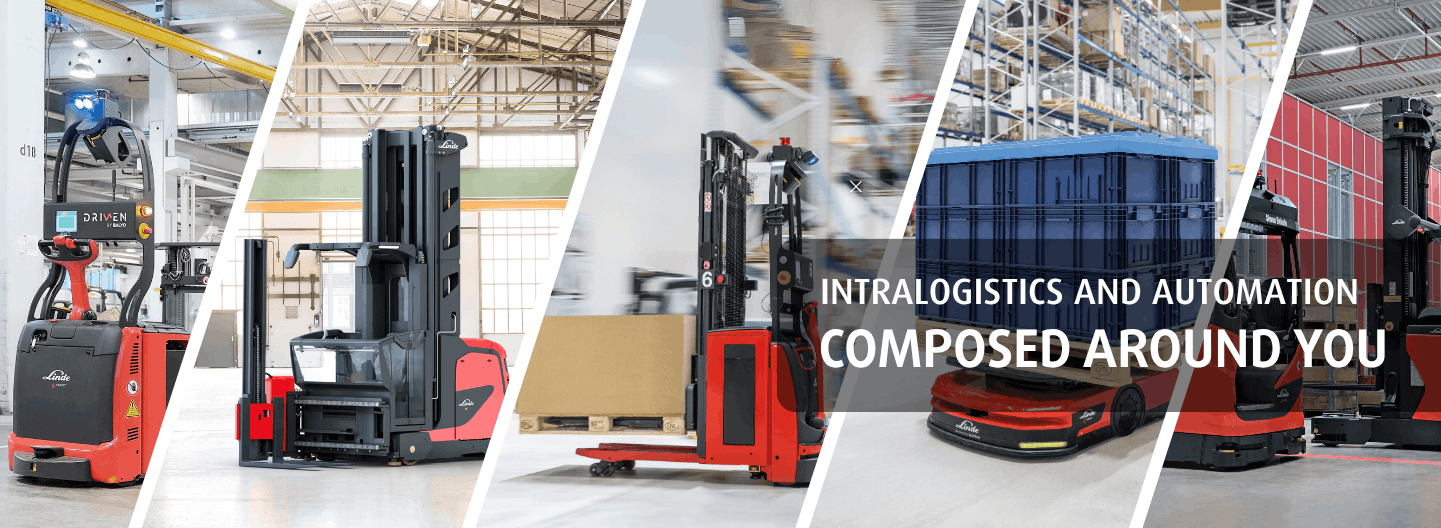
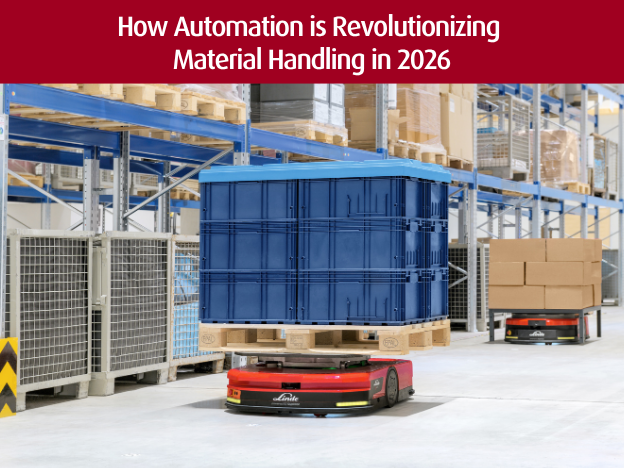
Automated Guided Vehicles (AGVs) and Autonomous Mobile Robots (AMRs) play a crucial role in automated material transport. These intelligent vehicles can safely navigate warehouse environments, transporting an automated pallet shuttle system, containers, and materials without human intervention.
The automated vehicle portfolio from Linde Material Handling enables flexible, efficient movement of goods across warehouses, production facilities, and distribution centers.
Stationary Automation Systems
For high-density storage environments and high-throughput operations, stationary systems provide powerful automation capabilities.
These include:
-
- Automated pallet shuttle systems
- Compact automated warehouses
- Storage and retrieval machines
- Conveyor technology
- Automated small-parts warehouses
By using these technologies along with mobile automation systems, Linde builds complete material handling automation systems that improve how efficiently operations run.
Software: The Brain Behind Automated Warehouses
Automation requires intelligent software to coordinate all systems and processes. Advanced warehouse management software connects supply chain data with physical warehouse operations.
The Linde Warehouse Manager, developed by Linde Material Handling, provides centralized control over warehouse processes. It enables businesses to:
- Monitor inventory in real time
- Coordinate manual and automated workflows
- Manage storage, picking, and dispatch operations
- Integrate seamlessly with ERP systems and other IT platforms
By orchestrating interactions between vehicles, storage systems, and personnel, the software ensures smooth and efficient warehouse operations.
Automation That Adapts and Grows with Your Business
One of the biggest advantages of modern warehouse automation solutions is their scalability. Businesses do not need to transform their entire warehouse infrastructure at once.
With Linde Material Handling, companies can start with a small number of automated vehicles or processes and gradually expand automation as their operations grow.
This modular approach allows organizations to:
- Begin with limited automation investments
- Expand systems step by step
- Integrate automation into existing infrastructure
- Scale operations according to future business requirements
Whether upgrading an existing warehouse or building a new logistics facility, Linde automation solutions integrate seamlessly with existing processes.
Automation Across Multiple Industries
Automation is transforming into smart intralogistics solutions across industries worldwide.
Manufacturing and Engineering
Automated material flows ensure production lines receive components precisely when needed, enabling the development of smart factories.
Automotive Industry
Automated logistics systems help manufacturers maintain highly efficient and flexible production processes.
Chemical Industry
Automation ensures safe and efficient handling of hazardous materials while minimizing human exposure.
Electronics Manufacturing
Advanced logistics automation helps manage complex supply chains and large inventories.
Retail and E-commerce
Retailers rely on automation to manage high order volumes and meet fast delivery expectations.
Across all these industries, Linde Material Handling provides tailored warehouse automation solutions designed to meet sector-specific requirements.
The Future of Material Handling
As global supply chains become more dynamic, warehouses must evolve into smart intralogistics solutions hubs powered by automation, robotics, and intelligent software.
The warehouses of the future will rely on:
- Autonomous transport systems
- AI-driven logistics software
- Integrated warehouse management platforms
- Data-driven decision-making tools
With over 70 years of innovation in forklift and warehouse technology, Linde Material Handling continues to lead the evolution of automated intralogistics.
Conclusion
Automation is revolutionizing material handling by transforming warehouses into efficient, intelligent, and scalable logistics environments.
By combining digitalization, robotics, and intelligent software, businesses can streamline operations, reduce costs, and improve workplace safety.
Through its comprehensive portfolio of automation technologies and decades of intralogistics expertise, Linde Material Handling empowers organizations to build future-ready supply chains that are efficient, flexible, and designed to grow.
