Category Archives: Blog

Electric Stacker

A Comprehensive Checklist To Choose The Right Stacker For Your Warehouse

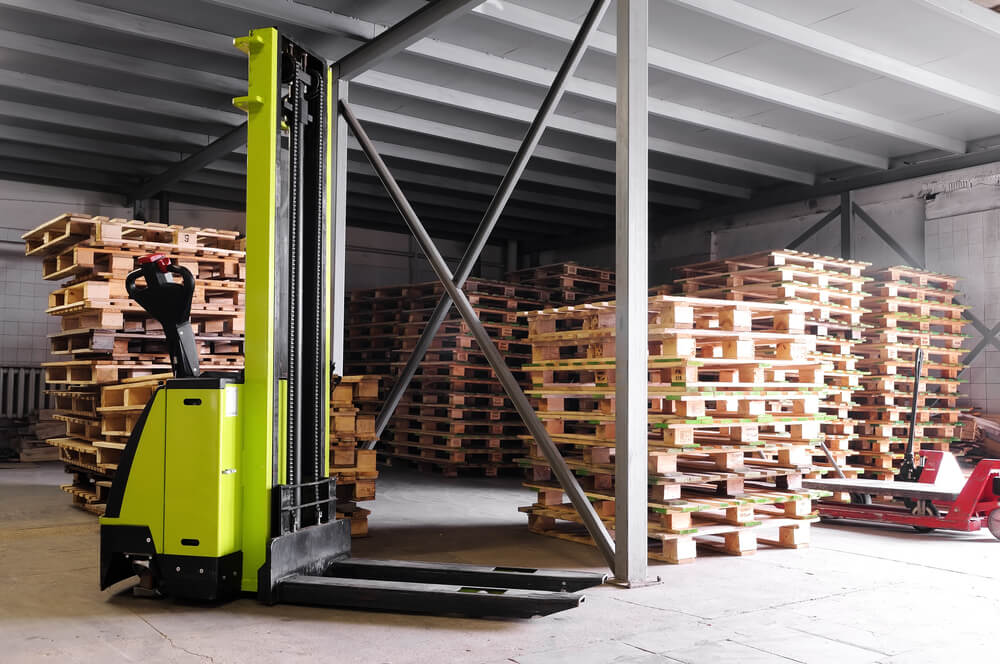
A stacker, also known by multiple names such as stacker trucks, electric stacker, pedestrian stackers, etc depending upon manufacturers, can basically be thought to be younger versions of forklifts. They are one of the most commonly found material handling equipment & warehouse equipment in factories and warehouses. They are used to lift and move pallets of goods and to load and unload them at heights.

As compared to a heavy duty diesel forklift the stacker is an ideal choice for operating in smaller and confined spaces dealing in lightweight materials. Some models are used to move un-palletized goods like machine parts, boxes, drums, and cartons. Although forklifts are suitable for heavy-duty operations, when it comes to parking space, stackers occupy lesser area than say, a diesel forklift. Stackers come in a wide range from hand-operated and hydraulic to electric stackers. While stackers sound all good with so many options to choose from, there are certain factors you should be aware of before going ahead. Below are a few points that might help in your purchase decision.
Electric Stacker, Heavy duty Diesel Forklift, Diesel forklift, Material handling equipment & Warehouse Equipment

Weight-bearing Capacity

Probably the first criterion in your checklist, you must determine the weight to be borne by your stacker on a regular basis. Stackers come with different capacities for you to pick an apt one. A stacker, starting with a load-bearing capacity of 1 Ton, is good enough for small to medium weight product stacking. While a higher capacity should be sought as the load increases.

Power Stacker Height

Your warehouse would have a certain height up to which you may need to stack your load. Choose one which could reach the maximum height. If you need stocking to be done a little over the ground level, then go for the stackers as high as 127”. The highest lifting height of your stacker is affected by the type of masts. Most Stackers feature fixed masts. When higher lift heights are required, a telescopic mast may be necessary. Telescopic masts have an inner mast nested within the outer mast channel. When forks are raised to a height higher than the capacity of the outer mast, the inner mast rises to provide additional lift height akin to a camera lens zoom mechanism.

Manual or Electric

This is not a very tough choice really as the benefits of electric stacker far outweigh that of a manual one unless your needs are very basic. Manual pallet stackers can feel a bit archaic and require more strength to operate as compared to the Electric stackers which can be raised and lowered at the press of a button. Also, you get a display panel indicating various parameters such as battery status, truckload, etc. Unless your requirements are very modest and you want to spend on labor and time instead of technology, the advice is to go for an electric one.

Other factors to consider before buying

  • The physical nature of goods to be lifted and moved.
  • The kind of pallets is being used for palletized goods.
  • The height of pallet racking beams, shelf heights, loading vehicle heights or heights of other loading/unloading points.
  • Frequency of operating the stacker in a day.
  • The stacker traveling distance and any gradients to negotiate.
  • Type of floor used by the stacker for operating.
  • Exposure to physical perils such as wet surface, corrosive elements, extreme weather conditions, etc.
  • Stacker operating knowledge of your workers.
  • Height and width restrictions that need to be considered eg: doorways, overhead obstructions, ceilings, etc.
  • Provision for charging socket points nearby to charge the battery.
  • And finally, your budget!

Keep in mind the above and your purchase is sure to be an intelligent decision!
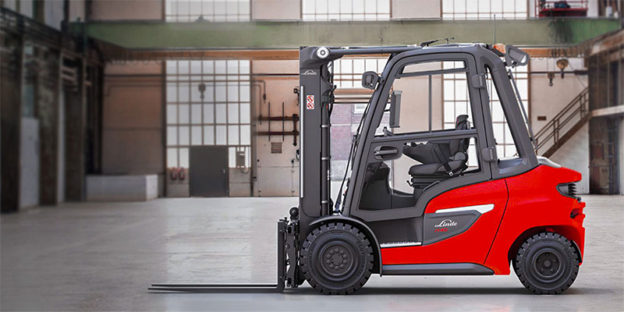
Forklift Rental

5 Questions to ask while looking to rent a forklift

Now that you’ve decided to rent a forklift, selecting the right one can be quite a task. With questions such as Battery forklift or Heavy duty diesel forklift? Or More weight lifting capacity or more height requirement? how do you choose the right one? The more informed you are about the available options, the more likely you are to find answers. If you don’t know how to go about it, below are the right questions to ask before renting a forklift.

1. WHAT ARE MY WEIGHT CAPACITY REQUIREMENTS?

Forklifts differ in their capacity to lift the weight. For instance, a four-wheel electric forklift can lift up to 5000 KGs while a three-wheeler may not be able to lift as much. As a trade-off, it can give you better maneuverability considering its size. You also need to keep in mind the kind of loads used, for eg: many loads are not symmetrical resulting in a non-uniform distribution of weight. Such loads mean that the truck will have to under-work its carrying capacity considering the shift in the center of gravity.

2. WHAT ARE MY LIFT HEIGHT REQUIREMENTS?

Different forklifts can achieve different heights, quite literally! If you have certain height requirements such as lifting and placing loads on high racks, then go for something like ‘Reach trucks’ which can reach as high as 30ft. If you have average height requirements and you are more into heavy lifting, then a four-wheel truck can lift a goodly 20ft while also achieving weight lifting goals.

3. WHAT IS MY OPERATIONAL AREA OF THE TRUCK?

Are you working indoors inside a factory, on a plain surface or rough terrains are your forte, identify your requirements first although a lift truck cannot work competently in the latter. If you have an outdoor setting which requires heavy duty tires for reaching, Thus, know your application area so that you won’t be in for a shock.

4. WHICH POWERING METHOD WILL SUIT ME?

Electric forklifts are powered by batteries while Internal combustion engines run on diesel or other fuel. Both have their pros and cons. For instance, electrically powered trucks make less noise but require a charging station while diesel forklifts can be loud and would require fuel storage on site. Find out what would work better at your site and for your application.

5. SHOULD I RENT OR BUY

Renting may be a less expensive option than to buy forklift truck outright, but it also depends on what sort of truck you need and how long you are going to use, in which case, the costs would rise up. On the other. many truck companies will also provide (limited) complimentary post-purchase service and assist in maintenance, which may not be an option in renting. You can enquire about the forklift price in India with manufacturers before buying. So ask yourself these questions before you choose to rent.

How To Pick The Right Forklift Mast According To Your Requirement

How to Pick the Right Forklift Mast According to Your Requirement

Selecting a reach truck requires you to consider several factors such as your application, the height at which you need to frequently work, the area of your warehouse, your preference of diesel or electric and likewise many other. Among that, there is one consideration which many may overlook, that is of the ‘mast’. The mast is the platform present on the forklift that lifts and lowers and carries the loads to be stacked into the compartments. There are various types of masts which come with certain advantages and possible shortcomings of their own, depending on the application.

The four main and commonly found ones, come in stages as categorized below:

Reach truck, Heavy duty Diesel Forklift, Material handling equipment & Warehouse Equipment, Very narrow aisle truck buy

  • Single stage
  • Two Stage
  • Three stage
  • Four Stage

Single Stage –

The single stage mast, as the name suggests, has a single channel with a restricted lifting height. It does not possess the faculty to free lift, i.e., to lift the load and forks without moving the mast channels. Due to this constraint, the mast has to extend higher than other categories for stacking loads. The single stage mast is commonly employed for outdoor applications where overhead clearance is not an issue due to lack of height clearance limitations.

Two Stage –

The two-stage mast, having a free lift, is more commonly found in warehouses. They are used for stacking and double stacking for indoor applications with limited overhead clearance. They provide great visibility and are perfect for use in trailers and boxcars.

Three Stage –

Probably the commonest and most versatile forklift available, it has got a free lift, maneuvers at greater heights and proves to be a great lift for stacking in general warehousing applications.

Four Stage –

Also known as Quad Mast, this provides the highest reach among all the four material handling equipment & warehouse equipment due to four sets of moving rails.  They are specifically designed for stacking at steep heights in specialized warehouses.

Factors to look for while choosing forklift mast:

Lowered height –

When a mast is fully lowered, it attains a certain height. This height varies with all the four types of masts. You may require considering this aspect if your warehouse or storage facility has specific height restrictions for loading docks, doors, entrances or other areas.

Load Backrest –

Most of the forklifts come equipped with a 48-inch load backrest while others come optional.

Considering Lift Height –

While selecting your mast type, you have to add a buffer height of at least 6 inches to your highest racking shelf. This will give you an assessment of the required lifting heights including the needed clearance for operators to safely transfer loads at height.

If you are looking to buy a reach truck, a heavy duty diesel forklift or a very narrow aisle truck buy it from Linde MHE. Here you have multiple options suiting all your warehouse needs.

Internal Combustion Forklifts Or Electric Forklifts? Don’t Buy Without Reading This

Internal Combustion Forklifts Or Electric Forklifts? Don’t Buy Without Reading This

When it comes to buying or renting an industrial forklift, you will be faced with the choice between an internal combustion engine vs an electric forklift engine. When your business depends on forklifts, it’s essential that you research your options before you go ahead with the purchase. The differences between electric and internal combustion lift trucks are plenty. Let us find out the basic distinctions that may be strong enough to influence your choice before buying the right Material handling equipment & Warehouse Equipment.

IC forklifts

ADVANTAGES

Less costly – When it comes to upfront cost, IC forklifts tend to be less expensive than electric forklifts, by up to 20 percent.

Comes with a high load carrying capacity of over 40,000 lbs – They can be used both indoors and outdoors, and tend to have a higher load capacity. This enables them to be applied to a wide range of jobs and environments without compromising their ability to operate safely. They are good for long runs, high speed, and ramps.

Can be refueled with an easily available diesel – The main benefit of an IC forklift is the ability to refuel on the fly.

DISADVANTAGES

Dissipation – The IC engine dissipates a lot of heat and carbon monoxide and hence requires good ventilation.

The maintenance cost is higher – The IC engines are constructed in such a way that they have a large number of moving parts. Hence, these forklifts require more frequent and expensive maintenance and repair.

Higher fueling cost – Over the long-term, the costs of refueling an IC forklift will be greater than recharging an electric forklift.

ELECTRIC FORKLIFTS

ADVANTAGES

  • Produce zero emissions – The electric engine emits no carcinogens and carbons, which means improved operating conditions and better health for your employees.
  • Reduced maintenance & repair cost– Since these machines have fewer moving parts than the IC engine, they require much less maintenance and fewer overall repairs.
  • Better ergonomics– Electric engines are more efficient, smooth and clean and operator friendly as compared to IC engines, which produce not only emissions but also vibration and heat, both of which contribute to operator fatigue.
  • Lower noise levels –Electric engines produce much less noise than the IC engines.
  • Lower fueling cost – when used judiciously, batteries and chargers cost less and energy costs are more stable.
  • Aisle width requirements are less than an IC lift truck

DISADVANTAGES

  • Higher initial cost– Although electric forklifts require less maintenance cost and repair, they are more expensive than the IC forklifts.
  • Limited availability over 15,000 lbs– Electric forklifts are less powerful as compared to a Heavy duty Diesel Forklift and hence can only be used for low to medium lifting applications.
  • More storage space– Storing electric forklifts batteries and their charging stations require additional space in a warehouse. They can require up to 200 square feet of storage space for the forklift, the battery and so forth. In addition, they need a place where they can be recharged.
  • Difficult to use outdoors– Electric forklifts can be difficult to use outside, especially when it is wet.

If you are looking to buy a reach truck, a heavy-duty diesel forklift or a very narrow aisle truck buy it from Linde MHE. Here you have multiple options suiting all your warehouse needs.

Forklift Price

Factors Affecting Forklift Pricing

When you set out to buy forklift truck, you’ll realize that even a small one is a big investment. Finding the right forklift for your business requires specialized insight if you expect to find the most productive, cost-effective machine. At Linde, we make it our goal to help customers find the right forklift for the right price by sharing some insights about the factors affecting forklift price in India.

Purchasing a forklift is nothing short of an investment. Understanding ‘where to start’ in buying a new forklift can seem like a complex process. With Linde, you can make sure you receive the best deal on your forklifts. Forklift makes for a significant investment, much like buying any other equipment or machinery for your factory or warehouse. Once you buy, you have invested for at least a few years to come. Hence, you have to consider various factors to ensure you buy the right forklift at the right price.

What does an average forklift cost you

Forklift price in India, Buy forklift truck, Battery forklift, Diesel forklift

One thing to keep mindful of while buying a forklift is that your loads may get heavier with time, but your ceiling height won’t practically change. As such, while buying a forklift, keep the future workload in accounts and buy a machine which will meet your expectations. Estimate your average load weight and compare it with your maximum load weight and consider purchasing one which is fit to carry the load. An average midsize forklift truck can cost you anywhere from INR 15 Lacs to 50 Lacs. The price variation is too large but that’s because it easily varies based on your application.

Factors Affecting Forklift Pricing

Some of the major factors that affect the price of the forklift are power type, tires, choices such as battery forklift & diesel forklift, and other safety features. Electric forklifts are costlier at the upfront than the IC engine but are more feasible in the long run considering low maintenance cost. Pneumatic tires in a truck are costlier than the cushion tires. One area where you should not compromise on the cost is the safety features such as an operator restraint device commonly known as the seat belt, a horn, and a backup alarm. Many accidents can be averted by the use of a simple alarm. Some high-end models even come with an automatic sound adjuster to regulate volume according to the ambient noise.

More The Price, More The Features

Price and Features have a simple correlation, they are directly proportional to each other. But that does not mean you have to buy only the most expensive model. It rather means that you have a choice from the least to the best according to your requirements and applications. It is better to consider the long term cost of ownership rather than the upfront price. Alternatively, if your desired features are beyond your expected budget, there is always an option of buying a used forklift. With some compromise on the usage and some benefit on the price, used vehicles can be a good option too.

Additional Forklift Accessories

Just like adding A/C, Power Windows, Seat Cushions and other accessories add to the base price of the commercial vehicles, same goes for buying forklifts too. Some common forklift truck accessories include Single-doubles, Side Shifters, Layer Pickers, Carton Clamps, etc.

Electric Forklift

5 benefits of electric powered forklift for your warehouse

Electric forklifts are most popularly used for indoor warehousing applications. With reduced fuel cost and high efficiency, electric forklifts & electric stackers become an optimum choice for a warehouse. Let’s take a look at the details that make electric forklifts the ideal choice for your warehouse.

Here are 4 benefits of using an electric forklift.

Electric stacker price, Electric Tow truck, Electric Stacker, Electric forklift

1. Less Noisy

In a bustling warehouse, it is easy to undervalue the importance of a noise-free environment until you experience the impact it can have on your productivity. This is true especially for smaller spaces with multiple forklifts traveling around collectively creating an amplified noise. The electric forklift engines are relatively noise-free as compared to diesel-powered engines. This can be a huge plus point for workers as they can easily communicate with each other without yelling. This also avoids damage to the earpads of the operators and helps keep their minds calm & the overall ambiance peaceful.

2. Pollution Free

The problem of emission is common with LPG gas or diesel operated engines. Electric forklifts do not emit any CO2 gases. They have zero emissions. This helps curb the issue of pollution thus maintaining the surrounding environment and employee health.

3. Reduced Heat Dissipation

IC forklifts produce significant heat from their fuel combustion, which dissipates and spreads into the warehouse space or presents hot surfaces on exhaust pipes that can burn or scald a worker. While electric forklifts consume only the energy they require without inefficiently wasting fuel while idling or while pouring out the pipe.

4. Lesser Overall Costing

The operating cost of electric forklifts calculates to be lower than the IC models. The equipment is also better priced, for instance, the electric stacker price with Linde is best in industry. Since IC models run on fuel and electric ones on the charge, you have the one-time investment of setting up a charging station at your warehouse. However, the maintenance cost is lower than fuel based engines.

5. Comes In Many Varieties

There are so many options available in electric forklifts from electric tow trucks & electric stacker to
battery operated pallet truck
& very narrow aisle truck. Be it maneuvering your way through those narrow lanes or stacking boxes at greater heights or lifting heavy weights for shorter distances, you can choose according to your warehouse requirements. Linde MHE has an electric truck for all your needs.

Considering all the above points, Electric forklifts scores better in terms of investment and usage. If you are looking for your options on industrial forklifts, visit Linde MHE.

Safety Precautions To Reduce Risk Of Falling From Order Picker

Safety Precautions to Reduce Risk of Falling from Order Picker

Order Pickers are designed to take the forklift operator up to the rack & stack the load. Unlike the Electric Stacker which is used for storing and retrieving loads from racking at short heights, an order picker is designed with a platform for the operator to stand on and easily access inventory at greater heights. They can commonly be found at warehouses requiring high stacking of products. Since an order picker requires vertical maneuvering and walking into & out of the cabins, there is always a risk of the operator falling from a height. In order to avoid such accidents, there are a few safety precautions that could be followed. To start with, the operator must hold a valid order picker license and should practically demonstrate safe operating skills. The understanding of the working of harnesses, lanyards and inertia reels are essential since they could act as life-saving devices in the event of a fall.

Order Picker, Electric Stacker, Electric forklift

There are two major dangers associated with Order Pickers

Damage to the operator – In case the operator falls and the lanyards or inertia reels holding him are too long, the operator will remain suspended below the platform or within racking. The operator will swing around into nearby objects mimicking the action of a pendulum. This could result in serious injuries such as fractures, muscle strains, and concussion.

Damage to the harness & lanyards – Alternatively, the harness and the lanyards can also be damaged if they brush against sharp objects or corners, causing loss to the strings and a potential risk to the safety of the operator.

A number of preventive measures can be applied to reduce or eliminate the fall risks as described below

  1. Operators should be banned from walking directly onto pallets attached to order pickers.
  2. Units should be equipped with a fully enclosed platform.
  3. Limiting the length of lanyards and inertia reel line to prevent the pendulum effect and saving workers from falling off.
  4. The harness, lanyard and inertia reel combinations should have a personal energy absorber to prevent injury due to a sudden fall arrest.
  5. The angle between the block and worker should be within designer specification when using an inertia reel.
  6. The fall arrest line should not come in contact with the edges when used with an inertia reel.
  7. A wire can be used as a lanyard to reduce the risk of the line cutting in case of a fall.
  8. The distance between the order picker and the rack should be minimized in order to avoid tripping off the gap. This also helps limit the length of the lanyard or reel line.
  9. Decrease the depth of the pallet racking to limit lanyard length.
  10. When using an inertia reel, the block should be located well away to avoid the possibility of hitting a worker’s head.

If you are looking for your options on order pickers, electric forklifts, pallet trucks, and other warehousing equipment, visit Linde MHE products.

7 Easy Hacks To Operate A Forklift Safely January 28, 2019

7 Easy Hacks To Operate A Forklift Safely

  • Forklifts are the essential components in most of the warehouses and workplaces to lift heavy loads, transport them and stack them to their places. Be it a diesel forklift or an electric one, these highly helpful machines can quickly turn into destructive weapons if used without the right safety measures. As such, there are quite a few easy to remember techniques which can prove to be useful to the longevity of the men as well as the machines.

Heavy duty Diesel Forklift, Diesel forklift

1. Deploying only well trained and qualified operators

While this seems obvious, we still can’t stress enough on the importance of proper training and qualification before officially driving the forklift in the workspace. According to a report conducted in India, each year nearly 11% of forklifts are a part of some accident, resulting in about 100,000 injuries and 85 fatalities. It is indeed a matter of great responsibility on the part of the operator in order to avoid fatalities and prevent workplace injury to self and others. Also, make sure minors are not operating your forklifts in your absence, it’s illegal!

Heavy duty Diesel Forklift, Diesel forklift

2. Use of Safety Gears

With great responsibility comes an elaborate list of safety gears. The uniform of a forklift operator is not complete unless he ticks the following list:

  • Hard hat – To protect your head from falling objects
  • Safety shoes – To protect from electric shock, fallen nails or other sharp objects and from heat and wet floors.
  • Neon Jackets – to improve visibility and also add some funk
  • And finally some nice well-fitting clothes – because flowy clothes could get caught up in some machinery.
  • The point is to not wear something which would compromise the operator safety while also preparing for the worst.

3. Understand the load-bearing capacity of the equipment

One of the most common reasons of forklift-related accidents is the imbalance caused to the vehicle due to improper loading. Loads should be stacked correctly whilst being mindful of the phenomenon called center of gravity. Be mindful of the below pointers:

  • Pallets or skids should be deployed to balance the load.
  • The loads should be spread equally across both forks
  • Do not overload
  • Do not Push a load with the fork
  • Keep the forks low while in motion

4. Mind your speed

The mundanity of driving the forklift all day might lead to the thought of doing something thrilling due to the driving confidence the operator acquires. We can’t blame this general tendency of men to speed up things once in a while to break the boredom, but it is definitely advised to be careful. As a caution,

  • Never cross the speed limit
  • Keep the right ratio of the load and the speed
  • Be careful not to bump into other loads, trucks or high voltage areas or slippery roads.

5. Stay off the mast

Do not allow anyone to stand or walk under the load or forklift machinery. The load can fall anytime and could cause injury or even death. Also, if the mast is lowered, it may crush your hands or legs if found beneath.

6. Ensure proper visibility

obstructed visibility might lead to accidents. Edges of loading docks and other areas where forklifts tread should be marked with reflective markings. Never underestimate the utility of signboards with clear indications placed wherever required. Poorly lit areas or too brightly lit areas can also pose a dampen visibility.

7. Regular safety checks

Check and recheck and always keep an eye for the missing screw. Machines DO need maintenance in order to keep them going long and safe.  Simple steps such as parking the forklift in the designated area every time it is used; turning ‘off’ the forklift, and taking out the keys, ensure half the work is already done. Linde is a leading manufacturer of heavy duty diesel forklift, Pallet trucks, and other warehouse & logistic equipment.

Forklift Batteries

Maintenance Tips For Forklift Batteries

This article is intended to help you extend the life of your forklift batteries while enhancing the performance of your forklift. The article aims to educate forklift operators to better manage and maintain an electric battery forklift.

Battery forklift, Buy forklift truck, Very narrow aisle truck buy

FORKLIFT BATTERY CHARGING ESSENTIALS

  1. Every battery can work only for a limited cycle. The recommended practice is to recharge the battery after every 8 hours of usage or when it drops down to 30% or less. On the contrary, charging the batteries frequently or as per convenience can cut short the battery life.
  2. It’s better to let the forklift battery charge to 100% every time you charge it.
  3. Do not drain your forklift battery beyond 80%
  4. Do not let a discharged battery sit for too long as this could result in the formation of sulfur on the battery plates, leading to reduced battery life.
  5. Also, maintain the room temperature while charging batteries as the rise in temperature potentially damages the battery.

SAFETY PRECAUTIONS AT THE CHARGING STATION

Battery forklift, Buy forklift truck, Very narrow aisle truck buy

Now that you know how to maintain the battery, it’s also essential to ponder upon the charging stations designated for the recharging of batteries. The charging areas should be well lit and have clear signages for safe maneuvering. Emergency facilities such as ventilation, fire extinguisher, water supply etc should be at hand. Apart from these, safety precautions should also be taken by the forklift operators such as:

  1. Do not smoke near a battery changing area.
  2. Abstain from wearing metal or hanging jewelry while charging as they are good conductors.
  3. Batteries with sealed vents should not be charged with a current exceeding 25 Amps.
  4. Always use safety equipment such as a glove, goggles, face shield, etc while handling.
  5. If the battery turns hot or the electrolyte fluid starts leaking from the vents, immediately turn off the charger and turn on at a lower charging rate once the battery has cooled down.
  6. Carefully dispose of the battery or send it for recycling

CHECKING BATTERY FLUID LEVELS

Water is required in the batteries to help them function properly. Have a periodic check of a fluid level such as after every 5 charging cycles. When required, top up with water. Water used should be distilled and should fall within the pH scale of 5 to 7. Batteries should only be topped off when they are fully charged.

MAINTAINING THE OPERATING TEMPERATURE

The recommended temperature to operate your forklift is under 45’C. However, it is not mandatory as the battery unit is equipped with all the cooling mechanism which helps regulate the temperature. The only flipside

EQUALIZING YOUR BATTERIES

Equalizing means to overcharge your batteries to remove sulfate crystals that have built up over time on the plates. This sulfation could otherwise shorten the battery’s life. Not all forklift batteries require equalizing but it is mentioned on the specifications. Wet cell batteries should be equalized once per week which should not be exceeded.

CLEANING THE BATTERY

Use a battery cleaner or warm water to clean the top of the forklift batteries. A monthly cleaning avoids tray corrosion due to build-up. Always read the safety instructions before cleaning the battery.

If you are looking to buy forklift truck, or a very narrow aisle truck buy one at Linde Material Handling, world’s foremost makers of forklift trucks and warehouse handling equipment. Linde industrial forklifts and trucks are specialized and are used across industry verticals. Check out the range of Linde products from Internal Combustion Truck, Battery Operated Pallet Truck, Electric Counterbalance Forklift, Tow Truck, Reach Truck, Electric Stacker, Order Picker, System Truck & Very narrow aisle truck.

Electric Pallet Trucks

Electric pallet trucks – Ease of warehousing and manufacturing

Pallet trucks or Jacks as they are commonly known, are among the most resourceful and versatile workhorses for any warehouse, manufacturing plants and material handling purposes. They come in a variety of options pertaining to individual needs and capabilities. For low-duty lifting, the most commonly found are the Manual Pallet trucks which function similar to a handcart, albeit, with features such as a hydraulic operated lever to lift, lower and steer the jack, allowing easy maneuverability. Plus, it has strong wheels to sustain rough terrains and uneven surfaces on which they are generally rolled. Among low to medium duty warehousing applications, the most popular pallet trucks, hands down, are the electric ones. Also known as, Battery operated pallet truck, Pallet jacks, Power jacks or simple walkies, these trucks feature power drive and power lift, which increases the overall control and reduces the amount of effort an operator needs while hauling. Some electric pallet trucks come with a platform to stand on and some even have compartments. Read on to know if Battery operated pallet trucks(BOPT) is what you are looking for.

electric-pallet-trucks

Types of Electric Pallet trucks

With modern attributes to simplify and optimize your day to day warehouse activities, electric pallets come equipped with features such as a power steering and automatic brakes, providing added safety. While Manual pallets are good for short horizontal transportation, electric ones provide that, plus ease of movement even in larger spaces. The electric pallets generally come with two variants elaborated below.

types-of-electric-pallet-trucks

  1. Pedestrian: Sometimes referred to as a walkie, it is a very useful pallet truck, which comes with a load-bearing capacity of around 1500kg. It is an ideal solution for light-duty applications. Compared to the hand pallet, it significantly eliminates the physical effort and improves working efficiency, consequently, helping you reduce working cost. Its traction and lift motor minimize the physical effort and stress to its users. It also comes with a joystick that controls traction and lifts with automatic braking on releasing traction or reversing direction
  2. Platform: For longer distances exceeding 30 meters in a single trip, it is best to consider a stand-on powered pallet jack where the operator can actually board the truck and ride along the pallet. These units are typically higher in capacity than the pedestrian variant and are hence ideal for heavy duty long distance materials handling. These employ a variety of different safety capabilities than standard pedestrian pallets to improve usage across more applications.

Maintenance of your BOPT

Since electric pallets are powered by Batteries, they require periodic charging. Regular checks of your floor space are advised for equipment maintenance as any severe bumps experienced from moving along uneven surfaces may damage the pivots. Moisture and dust proof AC motors require no maintenance as such, but it goes a long way in elongating the life of your pallets

Which BOPT is suitable for your warehousing and manufacturing needs?

Depending on the intensity of your work, it’s up to you to gauge your options and decide whatever suits you best. You can find detailed descriptions of various available options on Linde MHE for comparing yourself! (Material handling equipment & Warehouse Equipment).

Material handling equipment & Warehouse Equipment

How Electric Pallets fare against the manual ones

  • Environmentally friendly and safe choice.
  • Boost productivity with speedy operations.
  • Consists of various compartments to carry quick workplace essentials such as a pen, a book or maybe a cup of coffee.
  • Safer to operate with electric controlled speed limiting, emergency stop, braking and electric hydraulic lift pumps which eliminate operator strain.
  • Improves workplace safety.
  • No special license is required to operate the electric truck.
  • Easy to maintain and recharge between uses.
  • Ergonomic design makes it way better than the manual pallets
  • Makes work fun by minimizing physical stress and strain.

If you won’t find pallet trucks worth your investment, then always calculate the costing of your company in the long run considering the downtime, the productivity, as well as the health and safety of your operators. It is best to invest now so that you may harvest well in the future.